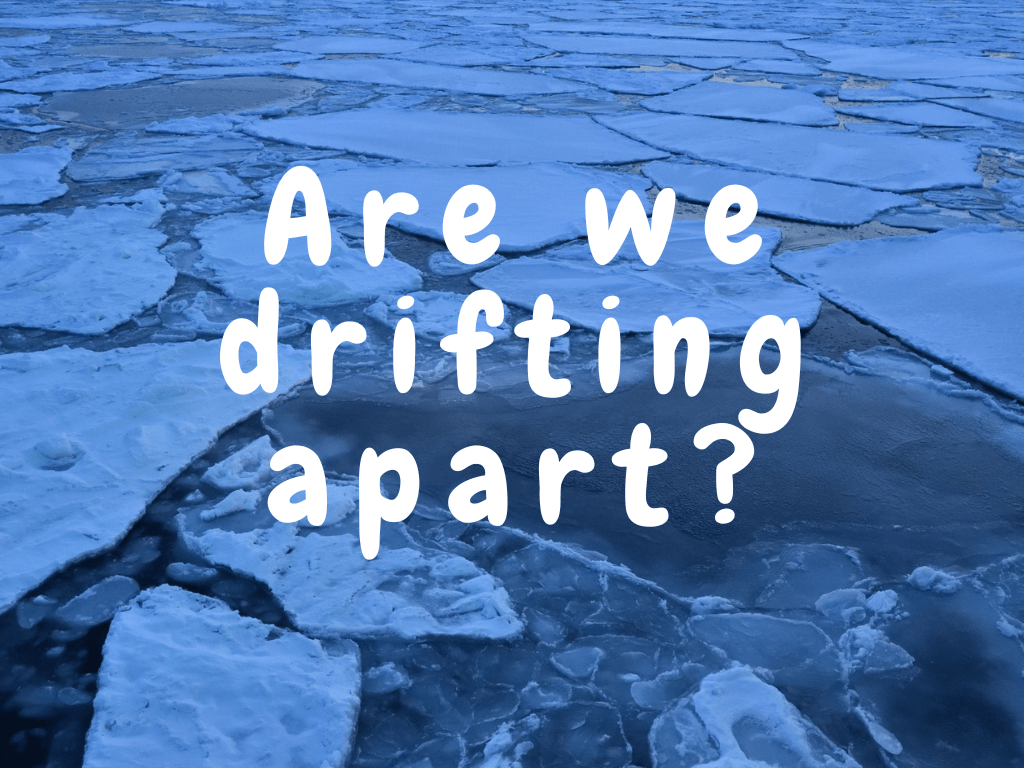
There’s a growing movement toward having people live in their homes for longer, offering home based care and independent community living and while the intention is rooted in dignity and independence, I can’t help wondering whether it aligns with the reality of how our communities are evolving. We speak about “community living” as if it’s a stable foundation, but is it still? Or are we holding onto an idea that no longer reflects how people actually live?
Recent data in Malta reflects this growing concern. Studies show that over half of the Maltese population now experiences some form of loneliness, with severe loneliness more than doubling in recent years. In 2025, 51.1% of respondents reported feeling lonely, and nearly 5% were classified as severely or very severely lonely. Another study comparing 2019 and 2022 data showed that emotional loneliness increased significantly, rising from 41.3% to 54.6%, with severe loneliness more than doubling.
More and more, our social lives are shifting into virtual spaces. We stay connected through screens, messages, and online groups, yet we’re physically more scattered than ever. Families and friends no longer choose to live close to one another. People move for reasons that make perfect sense, property prices, accessibility, school districts, greener areas, better amenities. But each move, each small shift, stretches the threads that once held neighbours together.
Even in Malta, where distances are tiny, these divides are becoming visible. You’d think a small island would naturally foster closeness, but the opposite seems to be happening. When a country is this compact, even subtle separations can create a sense of fragmentation. It raises a difficult question: If we’re drifting apart in a place this small, what does that say about the future of community life?
Our lifestyles are accelerating, and in that rush, we’re losing the small, grounding moments that once made us feel part of something larger. There was a time when you could knock on your neighbour’s door to borrow some flour or a couple of eggs. It was a simple gesture, but it meant you knew who lived next door. It created familiarity, trust, and a sense of shared life. Today, many people don’t even know their neighbour’s name, let alone feel comfortable asking them for something so small.
Those everyday interactions, brief, ordinary, human, were what stitched communities together. As they disappear, communities weaken in ways that are subtle but significant. We don’t notice the loss until we need support and realise the network around us has thinned.
We talk about wanting stronger communities, safer neighbourhoods, more support for vulnerable people. But how can these things exist if the social fabric beneath them is fraying? If people are too busy, too distant, or too overwhelmed to show up for one another, then the idea of community becomes symbolic rather than lived.
The concern isn’t that people don’t care, it’s that caring has become harder to express in a world that constantly pulls us in different directions.
If deinstitutionalisation depends on strong, reliable, understanding community networks, then we need to ask ourselves whether those networks still exist in the way we imagine. And if they don’t, what needs to change?
Because the question isn’t just whether people can live independently, it’s whether they can live connected.
I want to acknowledge that what I’m sharing comes from my own lived experience, and I recognise that it may not reflect everyone’s reality. I’ve always been someone who actively seeks out community, who values connection, and who goes out of my way to maintain and sustain the relationships around me. I’ve been fortunate to feel supported by the people in my life, and that shapes how I view the world.
But through my work in the social sector, I’ve also seen a very different side of things. People who don’t have the same networks, who feel isolated, who struggle to find support even in moments of real need. Their experiences are just as real as mine, and in many ways, far more common. The reflections I share come from holding both truths at once: the comfort of having a community that shows up, and the concern that many others do not have that same safety net.
Do you feel that your own sense of community has changed in recent years?
(Sources: Newsbook, Times of Malta and Malta Daily)
 SnapshOT
Leave a comment